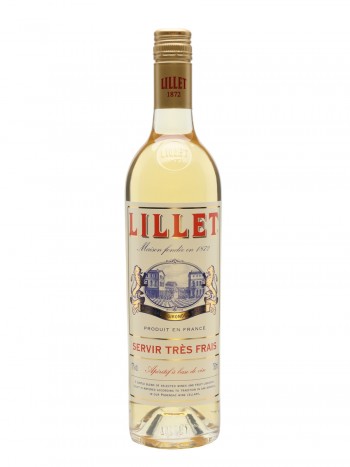
Lillet Blanc (75cl, 17%)
A great vermouth from Bordeaux. This is made with white Bordeaux wines and fruit brandy and is aged in oak for between 6 months and a year.
Aromatic, floral, and bright, it’s hard not to love Lillet. It’s summer in a glass, best sipped on its own, spritzed, or as a co-star in boozier beverages, such a Corpse Reviver and a Vesper martini. (Stirred or shaken?)
Nose: Herbal, fruity nose. Hints of parsley, red berries and cracked black pepper.
Palate: Hints of port, white grapes and lemon on the palate. Cedar, zest, notes of pepper and a development of sage.
Finish: Long finish with creaking oak notes.
What is Lillet?
Lillet comes in three different variations: Blanc, Rosé, and Rouge. Broadly speaking, all call for a base of Bordeaux Wine topped up with macerated liqueurs that are then blended and aged in French oak.
“To make Lillet, similar to any fortified wine, a base wine is infused and flavored with aromatic herbs, roots, and spices,” says Mattie Hansen, bar manager of Picalili in Los Angeles. “Then, the alcohol content is raised slightly with a proprietary brandy.”
The specifics are kept under lock and key (“the complete list of ingredients is a closely-guarded trade secret!” says Hansen), “But we do know that Lillet Blanc is made from a blend of Semillon and Sauvignon Blanc grapes, fortified with fruit liqueurs made from sweet, bitter, and green oranges, and aged in oak for a year before bottling,” she says. Blush-hued Lillet Rosé calls for a Merlot, Cabernet Sauvignon, and Sémillon base, while Lillet Rouge sticks to just Merlot and Cabernet Sauvignon.
What Does Lillet Taste Like?
With Lillet Blanc — the original and arguably the most recognizable of the bunch — “you are going to taste honey, orange peel or blossom, white floral notes, passionfruit, and slight herbal notes like pine,” says Cheyenne Ward, Bar Manager of FARM in Bluffton, South Carolina.
“It’s light in flavor — think a crisp white wine with citrus on the nose and almost like a very slight sweetness to start with a dry finish,” says Brittany Park, Bar Manager, Brasserie la Banque in Charleston.
Ward finds that Lillet Rosé is a little sweeter than Lillet Blanc and has notes of strawberry, grapefruit, and melon, with some slight citrus notes as well; Lillet Rouge, on the other hand, boasts a deeper, richer taste with notes of orange, ripe berries, vanilla, and baking spices.
| Weight | 2,2 kg |
|---|

Customer's also bought