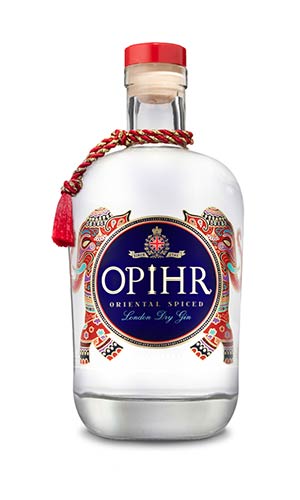
Opihr Oriental Spiced Gin (70cl , 40%)
A London Dry Gin made with botanicals from along the traditional spice route that led back to the UK. Indonesian Cubeb berries, Indian black pepper and Moroccan coriander are all used in this gin, launched by Quintessential Brands in 2013.
Opihr Oriental Spiced Gin (pronounced “o-peer”) is a unique, spice-forward London Dry Gin inspired by the ancient Spice Route, featuring botanicals sourced from around the world. It is known for its bold, warm, and earthy flavor profile, which makes it a distinctive spirit in the gin market.
Key Characteristics
- Flavor Profile: Opihr is a rich and robust gin with a smooth perfume and sharp bursts of citrus. Key notes include cumin, cardamom, and black pepper, which provide a warm, earthy background balanced by grapefruit and orange peel. It is a polarizing gin; some people love its intense spice, while others find it overwhelming.
- Botanicals & Origin: The botanicals are sourced globally, reflecting the historical spice trade route, and then distilled in traditional copper pot stills at England’s oldest continuously operating gin distillery, G&J Distillers.
- Cubeb Berries from Indonesia
- Cardamom and Black Pepper from India
- Coriander from Morocco
- Orange Peel from Spain
- Juniper from Italy
- Serving Suggestions:
- Classic G&T: Best served over ice with a premium tonic and a garnish of orange peel or a few crushed black peppercorns to enhance its citrus and spice notes.
- Cocktails: Its bold flavor makes it suitable for cocktails that can handle intense spices, such as an Opihr Mule (with ginger ale and lime) or a spiced Negroni.
The Brand & Name
The name Opihr refers to a legendary, wealthy port from which King Solomon was said to receive regular shipments of gold, silver, and exotic spices. The brand leans heavily into this narrative of discovery and travel, offering a “Drinks Atlas” of cocktails that highlight the origin of each botanical on its official website.
Regional Editions
Beyond the original, Opihr has released “Regional Editions” that focus on specific flavor profiles found along the ancient route, such as the Far East Edition (Szechuan pepper) and the Arabian Edition (black lemon and Timut peppers).
| Weight | 2,2 kg |
|---|
Customer's also bought